Digital marketing is getting the right people to find your business online and contact you, then counting what that costs. For most small businesses in India, it comes down to five things: a fast website, a complete Google Business Profile, one paid channel that suits your buyers, quick follow-up on WhatsApp, and tracking that shows which rupee brought which customer.
Everything else, from influencer posts to AI tools, is optional until those five work.
Why it matters more in India now
India had about 958 million active internet users in 2025, according to the IAMAI report covered by tele.net. Rural India makes up about 57% of that base, and around 61% of users watch short video. Your buyers, in a metro or a district town, are searching, scrolling and messaging on their phones before they call anyone.
That changes how small businesses win customers. A shop that used to depend on walk-ins and word of mouth now also competes on Google Maps, in search results and in the feed.
The five building blocks
1. A fast website that answers buyer questions
Your website is the one place online you fully control. Social platforms change their reach and rules. Google cannot rank an Instagram profile the way it ranks a page with clear text about your service and city.
A good small business site does not need to be big. It needs:
- What you do, for whom, and in which city, in the first two lines.
- Prices, or at least “starting from” prices. Hidden prices cost you enquiries.
- A WhatsApp button, a phone number and a short form on every page.
- Pages that load in under three seconds on a mid-range phone.
If your current site is slow or hard to update, our web development page explains how we build sites around these rules.
2. Google Business Profile for local search
For clinics, salons, coaching centres, restaurants, showrooms and service businesses, Google Business Profile often brings more calls than the website.
Google says local results are based mainly on relevance, distance and prominence. Relevance is how well your profile matches the search. Distance is how far you are from the searcher. Prominence is how well known you are, which includes reviews and links to your business. Google also says there is no way to pay for a better local ranking.
So the work is practical: fill every field, choose the right categories, add real photos, post updates, and ask happy customers for reviews every week. Our SEO service includes this setup.
3. One paid channel, chosen by how your buyers decide
You do not need to be on every platform. Pick the one that matches how your customers buy.
| If your buyers… | Start with | Why |
|---|---|---|
| Search when they have a need (“dentist near me”, “CA for GST filing”) | Google Search ads | You reach people already looking |
| Buy on looks, taste or impulse (food, fashion, decor) | Meta ads on Instagram and Facebook | Short video and photos sell the product |
| Are businesses comparing vendors | Google Search plus LinkedIn | Fewer, higher-value leads |
| Need to see a demo or a result | YouTube and Meta video | Seeing it work builds trust |
Run one channel well for two or three months before adding a second. Our paid ads page explains how we set budgets and test.
4. Fast follow-up on WhatsApp and calls
Most Indian customers would rather message than fill a long form. That makes WhatsApp the place where most leads are won or lost.
Simple rules make a big difference:
- Reply within an hour during working hours. A lead that waits a day often books someone else.
- Keep saved replies for prices, location and timings, but write the first line yourself.
- Ask every new chat how they found you, and note it.
5. Tracking that ties spend to customers
Google Ads conversion measurement can count form fills, calls from ads and from your website, app installs, and offline sales you upload later. Meta has similar tools. Set these up before you spend.
Then keep one simple monthly sheet with five numbers for each channel: spend, leads, cost per lead, customers, and cost per customer. The last number decides where next month’s money goes.
SEO and AI answers: what has changed
People now get answers from Google’s AI Overviews and from assistants like ChatGPT, not only from a list of links. Many owners ask if they need special “AI optimization”.
Google’s own guidance says there are no extra requirements or special markup needed to appear in AI Overviews or AI Mode. The usual basics still apply: let Google crawl your site, link your pages to each other, give people a good experience on the page, put important content in text, and keep your Business Profile current.
In practice, pages that answer one clear question in the first few lines, with real numbers and local detail, do well in both normal search and AI answers.
Social media: useful, but not the whole plan
Instagram, Facebook and YouTube help people trust you. They show your work, your team and your customers. Organic posts alone rarely bring steady enquiries for a new business, though.
Use social media for:
- Short videos that answer common questions or show results.
- Customer stories and reviews, with permission.
- Retargeting ads to people who visited your site but did not contact you.
Our social media service is planned this way: content that supports sales, not posting for the sake of it.
How much to spend
There is no single right number. Work it out from what a customer is worth.
Take an example. Say a physiotherapy clinic in Pune earns about ₹8,000 from an average patient over a course of treatment. If one in four enquiries becomes a patient, each enquiry is worth about ₹2,000. The clinic can then afford to pay up to a few hundred rupees per enquiry and still do well.
Many local businesses start with ₹20,000 to ₹50,000 a month in ad spend, plus the cost of whoever manages it. Give a channel two or three months at a fair budget before you judge it.
A 90-day starting plan
Month 1: fix the base. Speed up the website, add prices and contact buttons, complete Google Business Profile, set up conversion tracking for forms, calls and WhatsApp taps.
Month 2: test one channel. Launch one paid channel with two or three ad versions. Reply to every lead within an hour. Start asking for reviews.
Month 3: keep what works. Compare cost per customer by campaign. Cut the worst third, move money to the best. Start one SEO page per week for your top service and city.
At the end of 90 days you should know your cost per customer for at least one channel. That number makes every later decision easier.
Common mistakes to avoid
- Boosting posts without a goal. Likes do not pay rent. Every campaign needs a lead or sale to count.
- Sending ads to the home page. Send them to a page about the exact service in the ad.
- Judging a channel in one week. Ads need a few weeks of data to settle.
- No one owning the numbers. If nobody writes them down monthly, nobody knows what works.
Where Brand E5 fits
We plan, build and run this whole system for Indian businesses: the site, the tracking, the ads and the content, with one monthly report in plain language. See how it works on our digital marketing page, compare packages on pricing, or read how to build your own marketing team if you prefer to keep it in-house.
Sources
- tele.net: India's internet user base crosses 950 million in 2025 as per IAMAI reporttele.net.in
- Google Business Profile Help: Tips to improve your local ranking on Googlesupport.google.com
- Google Ads Help: About conversion measurementsupport.google.com
- Google Search Central: AI features and your websitedevelopers.google.com
Questions people ask
What is digital marketing in simple words?
It is everything you do online to get the right people to find your business and contact you: your website, Google listing, ads, social media, WhatsApp and email. Good digital marketing also counts what each new customer costs.
Which digital marketing channel is best for a small business in India?
For local businesses, Google Business Profile and Google Search ads usually bring enquiries fastest, because people are already searching. Brands that sell on looks or impulse, such as food or fashion, often do better with Meta ads and short video.
How much should a small business spend on digital marketing?
Many local businesses start with ₹20,000 to ₹50,000 a month in ad spend, plus management. Size the budget from what one new customer is worth to you, then test for two or three months before deciding.
How long does digital marketing take to work?
Paid ads can bring enquiries in the first two weeks if tracking and the landing page are ready. SEO usually takes three to six months to build steady traffic.
Do I need a website if I have Instagram?
Yes. Instagram can change its reach at any time, and Google cannot rank a profile the way it ranks a website. A simple fast site with your services, prices and contact options is the base every other channel points to.
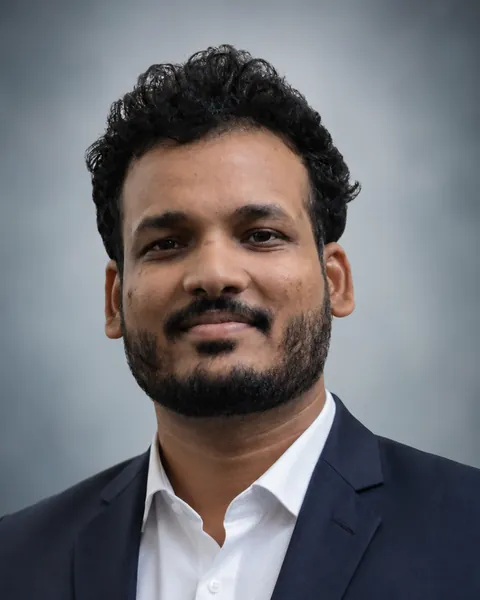
Bharath Yadav
Bharath Yadav founded Brand E5 to run marketing, websites and AI as one system. He has spent more than ten years on every side of growth: writing production software, advising Google Ads partners at Google Operations Center, and leading a team of 80 across two offices. He shipped his first client website in 2016.
More about Bharath